
Last updated October 30, 2026
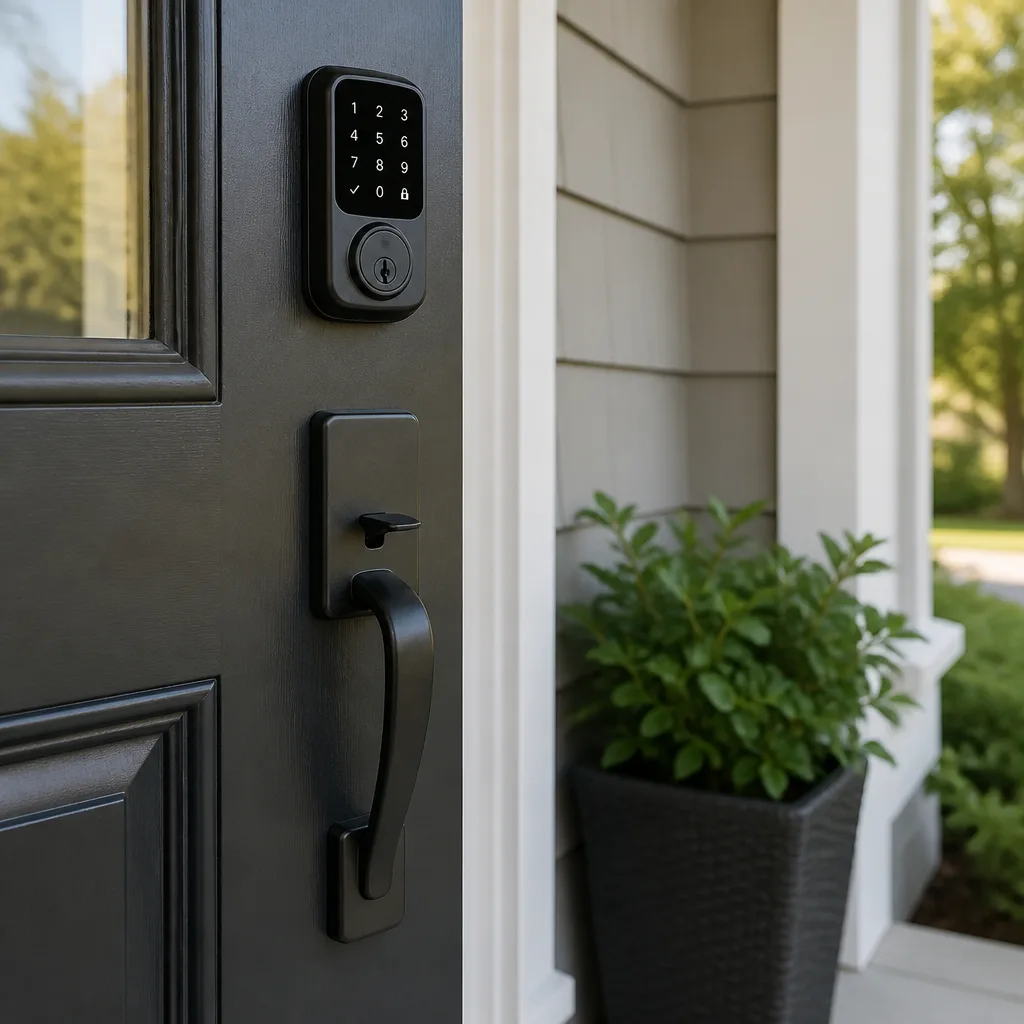 Smart locks
 House lockouts
 Re-keying
 Deadbolt upgrades
 Schlage
 Kwikset
 Car keys & fobs
Non-destructive entry first, always - and we re-key Schlage, Kwikset, and Baldwin locks on the spot while you watch
You get a price before we start. It does not change when we arrive. No surprises.
Get your free estimateLocksmith Permits, Codes & Inspections in TX: What You Need to Know
Texas is one of the stricter states for locksmith licensing, yet complaints about unlicensed operators in the Houston metro area remain among the highest in the state. The gap isn’t the law itself. It’s that most property owners in Pasadena and surrounding Harris County don’t know what a legitimate credential actually looks like, what work requires a license, and what recourse they have when a bad job compromises their security. This guide closes that gap. You’ll learn how the Texas Department of Public Safety regulates locksmiths, what permits may apply to your specific project, how to verify anyone who touches your locks, and exactly what to do if you discover you hired an unlicensed operator. We’re writing this from the perspective of a Pasadena locksmith who has seen the aftermath of both good and bad work across the Houston metro.
Styles & brands we work with
Quick Answer
Texas requires locksmiths to hold a license issued by the Texas Department of Public Safety (DPS) Private Security Board for most paid lock and key work. A general handyman or contractor license does not cover locksmith services, and no city-issued Pasadena permit replaces the state requirement. Homeowners should verify a locksmith’s DPS license before any work begins, because that license is what triggers the insurance, background check, and complaint process that protects you if a job goes wrong.
Table of Contents
- The Texas DPS Locksmith Licensing Structure: What a Real Credential Looks Like
- What Work Legally Requires a Licensed Texas Locksmith vs. a Handyman
- How Licensing Protects the Homeowner: Insurance, Liability, and Recourse
- Pasadena and Harris County Permit Requirements for Lock and Security Upgrades
- Texas Building Codes and Fire Safety Standards That Affect Lock Installation
- How to Verify a Texas Locksmith License in Under Three Minutes
- What to Do If You Hired an Unlicensed Locksmith: The DPS Complaint Process Step by Step
- Common Mistakes to Avoid
- When to Call a Professional
- Frequently Asked Questions
- The Bottom Line
The Texas DPS Locksmith Licensing Structure: What a Real Credential Looks Like
Texas regulates locksmiths under the Private Security Act, administered by the DPS Private Security Board. This means a locksmith credential in Texas is closer to the licensing you’d expect for a security guard or alarm installer than it is to a trade certificate a plumber or electrician carries. The board issues three relevant categories: Locksmith Company License, Locksmith License (for the individual technician), and a combination license. A company can hold a license while the individual technician who shows up at your door holds a separate personal license under that company.
What does this license have nothing to do with? The License to Carry (LTC), formerly known as the concealed handgun license. That is a firearm permit issued by the same DPS agency but a completely different division with no connection to lock work. We see this confusion regularly in Pasadena: a homeowner assumes a locksmith with “DPS” printed somewhere on a van or business card has been vetted for lock work, when sometimes the person is referencing an entirely unrelated credential. A legitimate locksmith credential will say “Texas Department of Public Safety Private Security Bureau” or “Private Security Board” and include a license number you can verify on the DPS TOPS website.
The licensing process itself is meaningful. Individual locksmith license applicants must pass a fingerprint-based criminal history check through the FBI and Texas DPS, complete required training, and renew every two years. Companies must maintain a physical business address in Texas, have at least one licensed locksmith as the qualifying party, and carry the required insurance. This is not a quick online form. It’s a barrier designed to keep people with criminal histories, no verifiable business presence, and no insurance out of the trade.
For Pasadena residents, this matters because the Houston metro’s size and population density make it a magnet for transient, unlicensed operators. They advertise on marketplace apps and flyers, do a few jobs in a neighborhood, then move on. A valid DPS license is your first and strongest screen for filtering them out.
What Work Legally Requires a Licensed Texas Locksmith vs. a Handyman
The Texas Private Security Act is clear: paid locksmith services require a locksmith license. Locksmith services are defined broadly and include rekeying cylinders, installing locks, creating keys by code, operating locks, repairing locks, and essentially any service involving a lock or access control device in exchange for compensation. The distinction is about the nature of the work, not the size of the job. Rekeying a single Kwikset deadbolt after a move is legally the same category as installing a Medeco high-security system in a commercial building.
What can a handyman or property manager do without a locksmith license? The law provides limited exemptions. An owner or property manager can change a lock on their own property or a property they manage if it’s done on a non-emergency, ordinary basis and not as an advertised locksmith service. A building maintenance employee can perform lock work as part of their job for that building’s owner. A general contractor doing a larger construction project can hire a licensed locksmith as a subcontractor. What a handyman cannot legally do is market lock and key services to the public, respond to lockouts, or charge Pasadena residents for rekeying a Yale front-entry handle or cutting car keys.
This creates a specific risk pattern we see across Harris County. A homeowner hires a general handyman for several small jobs after a move, and the handyman says they can “just rekey the doors too” while they’re there. The homeowner gets a lower combined price and no separate locksmith invoice. Then a few weeks later a key stops working or the lock fails, and the homeowner discovers the handyman has no locksmith insurance, no DPS license, and no legal obligation under the locksmith statutes. You have more recourse against a licensed operator, period.
How Licensing Protects the Homeowner: Insurance, Liability, and Recourse
A Texas DPS locksmith license is more than a piece of paper. It is the mechanism that triggers insurance requirements and creates a formal complaint pathway. Licensed locksmith companies in Texas must carry commercial general liability insurance with minimum coverage amounts set by the Private Security Board. If a licensed technician damages your door, jamb, or lock during a job, you can file a claim against that insurance. The same is true if a rekey is done incorrectly and the lock fails, allowing a burglary. An unlicensed operator who damages your Baldwin entry set usually has no insurance, no business address, and no assets you can reach.
The license also creates accountability through the DPS complaint process. When a licensed locksmith does something wrong, overcharges, performs substandard work, or behaves unprofessionally, you can file a complaint that can result in discipline up to license revocation. The licensee knows this and generally acts accordingly. They have professional standing to protect. An unlicensed operator has nothing to lose by walking away from a botched job.
Liability for security breaches gets more serious than door damage. If a locksmith installs locks incorrectly, uses the wrong cylinder type, or fails to rekey after you’ve terminated a tenant or caregiver’s access, the resulting unauthorized entry can have real legal and financial consequences for you as the property owner. In Pasadena, where many homes are older and built with doors and frames that have settled, a technician who doesn’t understand how to fit modern Schlage smart locks into non-standard preps can compromise the door’s integrity in ways you won’t notice until someone forces it.
Pasadena and Harris County Permit Requirements for Lock and Security Upgrades
Locksmith work itself does not require a city permit in Pasadena. Rekeying locks, replacing deadbolts, installing new knobs, and cutting keys are not permit-triggering activities under Pasadena’s building code. That surprises some homeowners who assume any modification to a door needs city approval. The threshold is structural: if you are not cutting into the door or frame, moving an opening, or altering fire-rated assemblies, you generally don’t need a building permit.
However, permits can enter the picture when lock work is tied to a larger security project. If you are installing an electronic access control system that requires new low-voltage wiring, a security camera system, or an alarm panel, you may need an electrical permit for the wiring component even though the lock hardware itself is exempt. The same applies to commercial properties in Pasadena where access control systems tie into fire alarm or emergency egress systems. Those fall under Harris County fire code and Pasadena building inspections, not the locksmith license itself.
What about business licenses? Pasadena requires a general business license for companies operating within city limits, but our focus here is on what the consumer needs to confirm. A licensed Texas locksmith working in Pasadena should be able to show a DPS license regardless of where the company is headquartered. For commercial jobs, ask whether the scope includes electrical or fire alarm integration and whether the locksmith’s work will be inspected by the city. A qualified locksmith will tell you when a permit is needed instead of quietly proceeding without one.
If you’re planning a security upgrade on a Pasadena commercial property, the safest path is to confirm the scope of work in writing: what hardware is being installed, whether wiring is involved, and which permits the contractor is responsible for pulling. A legitimate operator will have no hesitation putting that in the scope.
Texas Building Codes and Fire Safety Standards That Affect Lock Installation
Lock hardware is governed by building and fire codes in ways most Pasadena homeowners never think about until an inspector flags something. On commercial properties, egress doors must allow free exit without a key or special knowledge from the inside. That means a deadbolt on a commercial entry door that requires a key from the inside can violate fire code and fail an inspection. This is one of the most common violations we see after a property owner or handyman installs residential hardware on a commercial door to save money.
The relevant standards are the International Building Code and International Fire Code as adopted by Texas and enforced locally. On multi-family properties, corridor doors and stairwell doors often carry fire ratings that restrict the types of locksets and closers that can be installed. Swapping hardware on a fire-rated door with a non-rated lockset can void the door’s rating and create a dangerous condition even if the lock works perfectly. This is why commercial and apartment jobs in Pasadena require a locksmith who understands fire door hardware, not just a technician who can install a cylinder.
For single-family homes in Pasadena, the fire code is less restrictive, but one standard still matters: bedroom deadbolts. Any lock on a bedroom door that requires a key to exit is a serious safety issue and against life safety principles. Small children and elderly residents have been trapped by bedroom keyed locks. The same applies to any lock that can only be opened from one side using a tool. In homes where we see this, we recommend replacing the cylinder with a privacy function that has an emergency release on the outside.
ADA accessibility is another code dimension. On commercial properties and multi-family common areas, door hardware must meet reach range, operating force, and handle shape requirements. A round doorknob is not ADA-compliant in a public or common area. Lever handles are required. A licensed locksmith with commercial experience knows to check this on any Pasadena commercial job before ordering hardware.
How to Verify a Texas Locksmith License in Under Three Minutes
Before any locksmith touches your locks, take three minutes to verify they hold a current Texas DPS locksmith license. The process is straightforward and free, and it is the single most effective step you can take to protect yourself from unlicensed operators in the Pasadena area.
- Ask for the license number. A legitimate locksmith expects this question and answers without hesitation. If the person dodges, that’s your answer. Every licensed technician should carry their individual license and know their company license number.
- Go to the Texas DPS TOPS website. The Texas Online Private Security (TOPS) system allows public license verification. Search for the company name or the individual’s license number. The DPS website is tops.txdps.state.tx.us.
- Confirm the license type and status. The search result will show whether the license is for locksmith work specifically and whether its status is active. An expired license is not a license. If the status shows anything other than active, do not proceed.
- Match the name to the person. Confirm that the individual standing at your door matches the name on the technician license. A company can hold a license while the person sent to your home does the work under the company’s authority, but the technician should still be identifiable and covered.
- Ask for proof of insurance. Request an insurance certificate naming the locksmith company as the insured. Call the insurer to verify coverage is active. This takes one extra phone call and eliminates the most common source of uninsured-work problems.
We’ve had Pasadena homeowners tell us they hired someone after the person showed a business card with “Licensed and Insured” printed on it. Printing those words on paper costs nothing. Verification through TOPS and the insurance carrier is what costs something, because it requires the operator to actually be licensed and insured. That’s the action that separates a real operator from a card.
What to Do If You Hired an Unlicensed Locksmith: The DPS Complaint Process Step by Step
Discovering that someone who worked on your locks was not licensed is unsettling. The good news is that Texas gives you a clear process for reporting it. The complaint pathway is handled by the DPS Private Security Board, and it’s more accessible than most people think. You do not need a lawyer to file.
- Gather your documentation. Collect everything: the ad or listing where you found the person, screenshots of messages, the receipt or invoice, photos of the work done, and any notes about what was promised versus what was delivered. If you paid electronically, note the transaction details.
- Confirm the person’s licensing status. Run the TOPS search to verify the person is actually unlicensed or if their license was expired or suspended. The complaint form will ask for this information. If they claim to work for a licensed company, list that company name as well.
- File the complaint with the Texas DPS Private Security Board. You can do this online through the DPS website or by requesting a paper form. The complaint form asks for your information, the respondent’s information, a description of the violation, and any supporting documentation. Be specific about dates, amounts charged, and the work performed.
- Provide documentation of damages if applicable. If the unlicensed work caused damage to your property or a subsequent security incident, include photos, repair estimates, and any police reports. This helps the board determine the severity of the violation and whether to pursue enforcement action.
- Follow up with your local Pasadena law enforcement if appropriate. Serving as an unlicensed locksmith is a Class A misdemeanor in Texas. If you were actively defrauded or believe the person is operating in a way that threatens public safety, file a police report with the Pasadena Police Department. The DPS complaint and the police report serve different functions, and doing both gives you the strongest paper trail.
- Have a licensed locksmith inspect the work. This is a step people forget. The immediate risk is not just the financial loss from the original job. It’s the security of your home or business going forward. Have a licensed Pasadena locksmith inspect every lock the unlicensed operator touched, rekey if needed, and confirm the hardware was installed correctly. If the work was a rekey, you may not know whether the person kept duplicate keys. Rekeying again is the only way to eliminate that risk.
The DPS takes unlicensed locksmith complaints seriously, and enforcement actions result in penalties, cease-and-desist orders, and criminal referrals in egregious cases. Your complaint also helps protect other Pasadena residents from the same operator.
Common Mistakes to Avoid
- Assuming “Licensed and Insured” printed on a van or ad means anything. Verification through the Texas DPS TOPS system and a phone call to the insurance carrier is the only proof that matters. Words on a vehicle are marketing, not credentials.
- Letting a handyman rekey locks as part of a larger job. Rekeying a Kwikset cylinder is a locksmith service under Texas law. If the handyman is not licensed, you’ve hired an unlicensed locksmith without realizing it, and you lose the insurance and complaint protections a real license provides.
- Hiring the first result in a paid ad without checking the license. Paid search ads in the Houston metro are a favorite tool of unlicensed operators and lead-generation call centers that dispatch anyone with a drill. A Pasadena address in the ad does not mean the company is local or licensed.
- Skipping the permit conversation on commercial access control jobs. If your Pasadena commercial property is getting new electronic locking hardware tied into an alarm or fire system, a permit or inspection may be required. If your locksmith doesn’t flag this, you may end up with a code violation.
- Replacing hardware on fire-rated doors without checking the rating. Residential-grade locksets on rated commercial doors void the rating. The fire code violation may go unnoticed until an inspection or an emergency.
- Not rekeying after a property transition because “the previous owner gave me all the keys.” You have no way of knowing how many copies of those keys were ever made. After moving into a Pasadena home, rekey every exterior lock or have a licensed locksmith do it for you.
- Filing no complaint after hiring an unlicensed locksmith. When unlicensed operators face no consequences, they continue operating. Your DPS complaint and Pasadena police report are the two most effective tools for stopping them.
When to Call a Professional
Some lock work can wait, but certain situations create security gaps that get worse every day they go unaddressed. Call a licensed locksmith when you’ve moved into a new home and haven’t rekeyed the locks, when you’ve terminated a tenant or caregiver’s access and don’t know how many key copies are in circulation, when a lock has been damaged during an attempted break-in, or when you’ve discovered the previous work was done without a license and you need the security restored to a known state. The same applies when you’re installing high-security hardware like a Medeco cylinder on a commercial property or upgrading to a smart lock system that integrates with your home’s existing setup. Every one of these is a situation where the cost of delay is measured in access to your property, and the cost of hiring someone unlicensed is measured in the damage they can leave behind. Knight Locksmiths offers free estimates in Pasadena – call (833) 589-8049 to have a licensed technician walk you through what your property actually needs.
Frequently Asked Questions
Yes. Paid locksmith work in Texas requires a license from the Texas Department of Public Safety Private Security Board, covering both the locksmith company and the individual technician. There is no city or county license in Pasadena that substitutes for the state credential.
Look up the company or technician on the Texas DPS TOPS website using their license number or business name, and confirm the license type is locksmith and the status is active. Always match the technician’s name to the individual license, not just the company name.
No, not as a paid service offered to others. A handyman or property manager can change locks on their own property or for a property they manage under certain exemptions, but they cannot advertise or perform rekeying and locksmith services for the public without a locksmith license.
You can file a complaint with the DPS Private Security Board and a report with the Pasadena Police Department, since unlicensed locksmithing is a misdemeanor in Texas. If the person had access to your keys or pin codes, have a licensed locksmith rekey the locks immediately to restore security.
No. Rekeying locks, replacing deadbolts, and installing standard residential hardware do not require a city building permit in Pasadena. Permits come into play when lock work is part of a larger project involving electrical wiring for access control or fire alarm integration.
Rekeying a standard lock typically costs $75 to $150 in the Pasadena area, while replacing a deadbolt or entry handle starts around $120 for basic Kwikset hardware and goes up for Yale, Baldwin, or high-security brands. The full price is quoted on the phone before anyone is dispatched, and that is the price on your invoice with no call-out surcharge added on arrival. For an exact quote, call Knight Locksmiths at (833) 589-8049 – estimates are free.
The Bottom Line
Texas built a real licensing system for locksmiths, with background checks, insurance requirements, and a complaint process that gives consumers actual recourse. The system works only when homeowners and property managers use it. That means verifying the DPS license before any work starts, understanding which jobs legally require a licensed locksmith in the first place, knowing when a Pasadena permit applies, and filing the complaint when someone breaks the rules. The security of your home or business is too important to leave unverified. When you need lock work done, doing it through a licensed operator is the difference between a documented professional accountable to the state and a stranger with a drill who can disappear. Knight Locksmiths serves Pasadena and the Houston metro with licensed, insured technicians who handle everything from a standard Kwikset rekey to Medeco high-security installations. Call (833) 589-8049 for a free estimate before you start your next lock or security project.
Written by the team at Knight Locksmiths, serving Pasadena since 2011.
Related services: Knight Locksmiths home | Car Key Replacement in Pasadena | Emergency Locksmith in Pasadena | Rekey Locks in Pasadena